

2026-06-10 16:19:33
Coaxial cable is a type of electrical cable designed to transmit high-frequency signals with minimal interference and signal loss. It consists of a central conductor surrounded by insulating material, a metallic shield, and an outer protective jacket. Thanks to its unique construction, coaxial cable is widely used for television broadcasting, internet connections, telecommunications, security systems, radio frequency (RF) transmission, and data communication applications.
Even with the growth of fiber optics and wireless technologies, coaxial cables remain an essential part of modern communication infrastructure due to their reliability, durability, and cost-effectiveness.
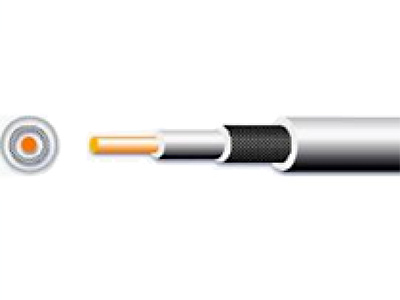
A coaxial cable transmits electrical signals through its center conductor while the outer metallic shield protects the signal from electromagnetic interference (EMI) and radio frequency interference (RFI).
The cable structure typically includes:
Center conductor
Dielectric insulator
Metallic shield
Protective outer jacket
Because the conductor and shield share the same axis, the design is referred to as "coaxial," meaning "sharing the same axis."
This structure enables coaxial cables to carry high-frequency signals over relatively long distances while maintaining signal quality.
The center conductor is usually made of copper or copper-clad steel and serves as the primary pathway for signal transmission.
The insulating layer separates the conductor from the shield and helps maintain signal integrity.
The metallic shield protects against external interference and minimizes signal leakage.
The outer covering protects the cable from environmental damage, abrasion, and moisture.
The most common type of coaxial cable used for television, internet, and communication systems.
Applications include:
Cable TV
Satellite systems
Broadband internet
CCTV surveillance
A digital coaxial cable is specifically designed for transmitting digital audio signals between electronic devices.
Common uses include:
Home theater systems
AV receivers
DVD players
Gaming consoles
Digital audio equipment
Because of its ability to carry digital signals accurately, digital coaxial cable remains a popular audio connection solution.
A flexible coaxial cable is designed for installations requiring frequent movement or tight bending radii.
Applications include:
Test equipment
Robotics
Aerospace systems
Telecommunications equipment
Flexible coaxial cables provide excellent signal performance while maintaining mechanical flexibility.
A flat coaxial cable features a flattened design that allows it to pass through narrow spaces such as windows and door frames.
Common applications include:
Apartment installations
Temporary cable routing
Indoor antenna systems
Its low-profile design makes installation easier without requiring wall modifications.
UL Coaxial Cable refers to coaxial cable products that comply with Underwriters Laboratories (UL) safety standards.
These cables undergo testing for:
Fire resistance
Electrical safety
Material performance
Product reliability
UL-certified cables are commonly specified for commercial and industrial installations.
One of the most common uses of coaxial cable for internet is broadband data transmission.
Cable internet providers use coaxial networks to deliver high-speed internet access to homes and businesses.
Advantages include:
Reliable connectivity
High bandwidth capacity
Wide network coverage
Cost-effective infrastructure
Many internet service providers continue to utilize coaxial cable systems as part of hybrid fiber-coaxial (HFC) networks.
A Spectrum coax cable is commonly used in cable television and broadband internet services provided through coaxial network infrastructure.
These cables support:
Television signals
Internet connectivity
Voice communication services
High-quality coaxial cables help ensure stable performance and minimal signal degradation.
Reliable connections are essential for maintaining signal quality.
Coaxial cable connectors are designed to connect cables to equipment while preserving signal integrity.
Popular connector types include:
F-Type connectors
BNC connectors
SMA connectors
N-Type connectors
TNC connectors
Each connector type is designed for specific frequency ranges and applications.
Coax connectors are specialized fittings used to terminate coaxial cables and connect them to communication equipment.
They provide:
Secure electrical contact
Minimal signal loss
Mechanical stability
EMI protection
Choosing the proper connector is critical for achieving optimal system performance.
Coaxial cables have been widely used for transmitting television signals for decades.
Many households use coaxial cable for internet connections through cable network providers.
Telecommunication systems rely on coaxial cables for signal distribution and RF communication.
CCTV cameras often use coaxial cables to transmit video signals to monitoring equipment.
RF communication equipment uses coaxial cables because of their excellent shielding properties.
Digital coaxial cable connections remain popular for high-quality digital audio transmission.
Selecting the best coaxial cable depends on several factors.
Different cables support different frequency ranges.
Longer cable runs may require lower-loss cable designs.
Consider:
Indoor or outdoor use
Temperature exposure
Moisture resistance
UV protection
Applications with high electromagnetic interference may require enhanced shielding.
Choose flexible coaxial cable for installations involving movement or tight spaces.
When purchasing coaxial cables, working with experienced Coaxial Cable Suppliers can help ensure product quality and performance.
Look for suppliers that offer:
Consistent manufacturing quality
Industry certifications
UL-compliant products
Custom Cable Solutions
Technical support
Competitive pricing
Reliable suppliers can help identify the most suitable cable for your specific application.
Coaxial cables remain popular because they offer:
Excellent signal protection
High-frequency transmission capability
Strong EMI resistance
Long service life
Cost-effective installation
Wide application range
Reliable performance
These benefits continue to make coaxial cable a valuable communication medium across many industries.
Although fiber optic technology is expanding rapidly, coaxial cables continue to evolve.
Modern developments include:
Improved shielding technologies
Higher bandwidth capacity
Lower signal attenuation
Enhanced flexibility
Better fire-resistant materials
These innovations help ensure that coaxial cable remains relevant for many communication and data transmission applications.
Coaxial cable is a highly reliable transmission medium used for television, internet, telecommunications, audio systems, and RF applications. Whether using digital coaxial cable, flexible coaxial cable, flat coaxial cable, or UL Coaxial Cable, the technology provides excellent signal integrity and interference protection.
Combined with high-quality coaxial cable connectors and coax connectors, modern coaxial cable systems continue to support broadband internet, broadcasting, and communication networks worldwide. Choosing experienced Coaxial Cable Suppliers and selecting the best coaxial cable for your application can significantly improve signal performance and long-term reliability.

Specializing in the production of wire and cable Hong Kong funded enterprises (both domestic and foreign sales); has won the IS09001-2000 international quality certification and the United States UL safety certification, is a professional wire manufacturers.
Tel: +86-769-8178 1133
Mobile: +86-13549233111
E-mail: andy@herwell.com.cn
Add: No.13 Shui Chang Er Road, Shui Kou Village, Dalang Town, Dongguan City, Guangdong Province, China


