

2026-06-10 16:29:01
A coaxial cable is one of the most widely used transmission media for carrying radio frequency (RF), video, audio, and data signals. From cable television and broadband internet to satellite communications and digital audio systems, coaxial cables play a critical role in modern communication networks. Understanding how a coaxial cable works can help users select the right cable for their specific applications and achieve optimal signal performance.
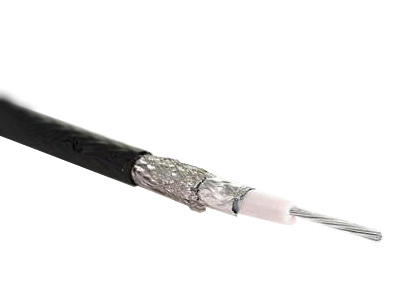
Before exploring how it works, it's important to understand the structure of a coaxial cable.
A coaxial cable consists of four primary components:
Center conductor
Dielectric insulation
Metallic shielding
Outer protective jacket
These layers are arranged concentrically around a common axis, which is why it is called a "coaxial" cable.
This unique design allows coaxial cables to transmit signals efficiently while minimizing interference and signal loss.
A coaxial cable works by carrying electrical signals through its central conductor while the surrounding metallic shield protects those signals from external electromagnetic interference.
When a signal is transmitted:
Electrical energy travels through the center conductor.
The dielectric insulator maintains a fixed distance between the conductor and shield.
The outer metallic shield acts as a return path for the signal.
The shield blocks external electromagnetic noise from affecting signal quality.
The outer jacket protects the cable from environmental damage.
Because the signal is confined within the cable structure, coaxial cables can transmit high-frequency signals with excellent stability and low attenuation.
The center conductor is typically made from copper or copper-clad steel.
Its primary function is to carry the transmitted signal.
High-quality conductors improve signal strength and reduce transmission losses.
The dielectric layer surrounds the center conductor and separates it from the outer shield.
This insulation helps maintain:
Signal integrity
Characteristic impedance
Electrical isolation
The quality of the dielectric material significantly affects cable performance.
The shield is one of the most important features of a coaxial cable.
Usually made from braided copper, aluminum foil, or a combination of both, the shield:
Blocks electromagnetic interference (EMI)
Reduces radio frequency interference (RFI)
Prevents signal leakage
Improves transmission reliability
This shielding capability is one reason coaxial cables remain popular in communication systems.
The outer jacket protects the cable against:
Physical damage
Moisture
UV exposure
Chemicals
Abrasion
Different jacket materials are available depending on the installation environment.
The coaxial structure creates a controlled electromagnetic field between the center conductor and the shield.
This design offers several advantages:
Signals remain concentrated within the cable structure, reducing attenuation over longer distances.
Coaxial cables can support a wide range of frequencies, making them suitable for:
Television broadcasting
Broadband internet
Satellite communication
Digital audio systems
The shield protects signals from interference generated by nearby electrical equipment.
Properly installed coaxial systems deliver stable signal quality over time.
One of the most common applications today is coaxial cable for internet.
Internet service providers often use hybrid fiber-coaxial (HFC) networks to deliver broadband services.
The process typically works as follows:
Data travels through fiber optic networks to neighborhood distribution points.
Signals are converted and transmitted through coaxial cables.
The cable modem receives the signal.
The modem converts the data into internet connectivity for connected devices.
This infrastructure allows providers to deliver high-speed internet using existing coaxial networks.
A digital coaxial cable is specifically designed to carry digital audio signals between devices.
Common equipment includes:
AV receivers
Blu-ray players
Gaming consoles
Sound systems
Digital audio processors
Unlike analog audio cables, digital coaxial cables transmit binary data, helping preserve sound quality during transmission.
A flexible coaxial cable operates using the same transmission principles as standard coaxial cable but incorporates materials that allow greater bending and movement.
Flexible coaxial cables are commonly used in:
Test and measurement equipment
Aerospace systems
Robotics
Telecommunications equipment
Mobile communication devices
Their flexibility simplifies installation in confined spaces and moving applications.
A flat coaxial cable uses a low-profile design that allows it to pass through narrow openings such as:
Windows
Doors
Temporary cable routes
Despite its flattened shape, the cable maintains the shielding and signal transmission characteristics required for reliable communication.
Signal quality depends heavily on proper termination and connections.
Coaxial cable connectors create secure electrical interfaces between cables and equipment.
Popular connector types include:
F-Type connectors
BNC connectors
SMA connectors
N-Type connectors
TNC connectors
Each connector type is designed for specific frequency ranges and applications.
Coax connectors are specialized fittings that attach to the ends of coaxial cables.
Their functions include:
Maintaining impedance matching
Reducing signal reflections
Ensuring reliable connections
Minimizing signal loss
Selecting the correct connector is essential for achieving optimal performance.
Cable television systems rely on coaxial cables to distribute video signals.
Many internet providers use coaxial cable for internet delivery through cable modem networks.
Satellite receivers use coaxial cables to transfer signals from satellite dishes.
CCTV installations frequently use coaxial cables to transmit video signals.
Communication infrastructure often uses coaxial technology for RF signal distribution.
Digital coaxial cable remains a popular choice for high-quality digital audio connections.
Selecting the best coaxial cable depends on several factors:
Different applications require different cable specifications.
Longer cable runs may require lower-loss designs.
Applications in noisy environments benefit from enhanced shielding.
Consider factors such as:
Indoor or outdoor use
Moisture exposure
UV resistance
Temperature range
A flexible coaxial cable may be preferable in applications involving movement or tight bends.
Experienced Coaxial Cable Suppliers can help ensure product quality and long-term reliability.
Look for suppliers offering:
Consistent manufacturing standards
Technical expertise
Product certifications
Custom Cable Solutions
Comprehensive quality control
For commercial and industrial projects, many buyers also specify UL Coaxial Cable products to meet safety and compliance requirements.
Understanding how a coaxial cable works begins with its unique structure. By combining a center conductor, dielectric insulation, shielding, and a protective outer jacket, a coaxial cable efficiently transmits signals while minimizing interference and signal loss.
Whether used as a digital coaxial cable, flexible coaxial cable, flat coaxial cable, or coaxial cable for internet, this technology remains one of the most reliable methods for transmitting high-frequency signals. Combined with quality coaxial cable connectors, coax connectors, and products from trusted Coaxial Cable Suppliers, coaxial cable systems continue to support communication networks around the world.

Specializing in the production of wire and cable Hong Kong funded enterprises (both domestic and foreign sales); has won the IS09001-2000 international quality certification and the United States UL safety certification, is a professional wire manufacturers.
Tel: +86-769-8178 1133
Mobile: +86-13549233111
E-mail: andy@herwell.com.cn
Add: No.13 Shui Chang Er Road, Shui Kou Village, Dalang Town, Dongguan City, Guangdong Province, China


