

2026-09-08 11:44:00
Control cables are widely used for transmitting electrical signals and controlling equipment in industrial, automation, building, and electronic applications. Depending on the working environment and electrical requirements, different cable constructions are available, including UL Control Cable, Low Voltage Control Cable, Multi Core Shielded Cable, and Screened Multicore Cable.
Other commonly used cable products include Thermoplastic Sheathed Cable and PVC Insulated Hook Up Wire, which provide different solutions for equipment wiring, internal connections, and control systems. Choosing the right cable construction is important for achieving reliable signal transmission, electrical insulation, and long-term operating performance.
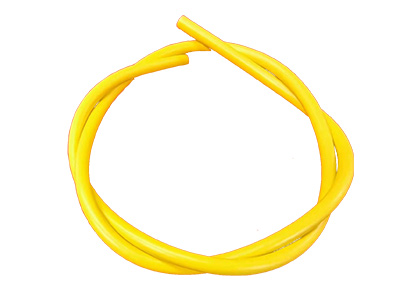
A control cable is an electrical cable designed primarily for transmitting control signals between equipment, instruments, machines, and electrical systems.
Unlike power cables that are mainly designed to deliver electrical power, control cables are often used for monitoring, switching, measurement, automation, and control functions.
Depending on the application, control cables can be supplied in different configurations, such as:
UL Control Cable
Low Voltage Control Cable
Multi Core Shielded Cable
Screened Multicore Cable
Thermoplastic Sheathed Cable
PVC Insulated Hook up wire
The appropriate cable depends on voltage requirements, number of conductors, shielding requirements, installation environment, and equipment design.
UL Control Cable is designed for applications where applicable UL requirements are part of the cable selection criteria. UL-compliant Cable Solutions are commonly considered for equipment and electrical systems that require specific safety and performance requirements.
For manufacturers exporting electrical equipment, choosing an appropriate UL Control Cable can help meet the requirements of the target application and market.
UL Control Cable can be used in applications such as:
Industrial control systems
Electrical equipment
Automation systems
Control panels
Machinery
Electronic equipment
The specific UL standard or certification requirement should be confirmed according to the intended cable construction and application.
Low Voltage Control Cable is designed for control and signal applications operating within low-voltage electrical systems.
These cables can be used to connect different components within control systems while providing electrical insulation and reliable signal transmission.
Low Voltage Control Cable can be suitable for applications requiring:
Reliable control signal transmission
Electrical insulation
Flexible wiring configurations
Compact cable construction
Integration into electrical equipment
The conductor size, insulation material, number of cores, and cable structure can vary according to the application.
A Multi Core Shielded Cable combines multiple conductors with a shielding layer. The multi-core structure allows several signals or circuits to be carried through one cable, while the shielding layer can help reduce the effects of external electromagnetic interference.
This makes shielded multicore cable particularly useful in environments where multiple control or signal circuits operate close to electrical equipment.
A Multi Core Shielded Cable can offer several practical advantages:
Multiple circuits in one cable
Reduced cable complexity
Improved protection against electromagnetic interference
Suitable for signal and control applications
Convenient system wiring
The type and structure of shielding should be selected according to the application and expected interference environment.
Screened Multicore Cable is another common solution for applications requiring multiple conductors and protection against electromagnetic interference.
The screen provides an additional conductive layer around the conductors. Depending on the cable design, different screening structures may be used.
The terms Multi Core Shielded Cable and Screened Multicore Cable are often used to describe cables that combine multiple cores with a shielding or screening layer.
The exact construction can vary between cable products. When selecting a cable, it is important to check the conductor arrangement, screen type, insulation, voltage rating, and intended application rather than relying only on the product name.
Thermoplastic Sheathed Cable uses a thermoplastic material as the outer sheath. Thermoplastic materials such as PVC can provide electrical insulation and mechanical protection for the internal conductors.
Depending on the design, thermoplastic sheathed cables can be used in various electrical and control applications.
Typical considerations include:
Protective outer sheath
Electrical insulation
Flexible cable configurations
Different conductor arrangements
Suitability for various equipment applications
The exact properties of a Thermoplastic Sheathed Cable depend on the selected sheath material and cable construction.
PVC Insulated Hook Up Wire is commonly used for internal wiring and electrical connections inside electronic and electrical equipment.
The PVC insulation provides electrical isolation around the conductor, while the relatively simple construction makes hook-up wire convenient for equipment wiring.
PVC Insulated Hook Up Wire can be used for:
Internal equipment wiring
Electrical panels
Electronic devices
Control systems
Instrumentation
Circuit connections
Hook-up wire is generally selected according to conductor size, insulation requirements, voltage rating, temperature requirements, and the intended installation environment.
Choosing a suitable control cable requires evaluating both electrical and mechanical requirements.
Determine whether the application requires a Low Voltage Control Cable or another cable designed for a different voltage range.
If multiple control signals need to be transmitted through one cable, a multicore construction can simplify wiring and installation.
For applications exposed to electromagnetic interference, a Multi Core Shielded Cable or Screened Multicore Cable may be appropriate.
The insulation and outer sheath should be suitable for the installation environment, including temperature, flexibility, mechanical exposure, and other operating conditions.
For equipment intended for markets or applications requiring UL compliance, an appropriate UL Control Cable should be selected based on the applicable requirements.
Control cables are used across many industries and electrical systems.
Control cables connect sensors, controllers, switches, and other components in automated machinery and production systems.
Control panels often require multiple electrical connections for monitoring, switching, and control functions. Multicore cables can help organize these connections.
Industrial machines use control cables to connect different electrical and control components.
PVC Insulated Hook Up Wire and other control wiring solutions can be used for internal connections within electronic equipment.
Shielded and multicore cable constructions can be used in instrumentation and signal transmission applications where reliable connections and interference control are important.
Selecting a suitable cable can improve the overall reliability and organization of an electrical system.
A properly selected control cable can provide stable connections between control components and equipment.
Multicore cables allow multiple conductors to be combined into a single cable, helping simplify system wiring.
Shielded cable constructions can help reduce the impact of electromagnetic interference on sensitive signals.
Different insulation, sheath, core, shielding, and conductor configurations allow control cables to be adapted to different applications.
Control cables are mainly used to transmit control, monitoring, and signal connections between electrical equipment, machinery, instruments, and control systems.
UL Control Cable is a control cable designed to meet applicable UL requirements. The exact certification or standard depends on the cable construction and intended application.
A Low Voltage Control Cable is designed for control and signal applications within low-voltage electrical systems. Its specifications depend on the equipment and operating requirements.
A Multi Core Shielded Cable contains multiple conductors and a shielding layer. It can be used for control and signal applications where multiple circuits and electromagnetic interference protection are required.
Screened Multicore Cable combines multiple conductors with a screen or shielding layer. It is commonly considered for applications where signal protection and multiple connections are required.
PVC Insulated Hook Up Wire is a single-conductor or similar internal wiring solution with PVC insulation, commonly used for connections inside electrical and electronic equipment.
Thermoplastic Sheathed Cable uses a thermoplastic outer sheath to provide insulation and protection for the internal conductors. Its specific properties depend on the sheath material and cable construction.
Control cables are essential for reliable connections in industrial automation, machinery, electrical equipment, instrumentation, and electronic systems. From UL Control Cable and Low Voltage Control Cable to Multi Core Shielded Cable and Screened Multicore Cable, different cable constructions are available for different control and signal requirements.
Specializing in the production of wire and cable Hong Kong funded enterprises (both domestic and foreign sales); has won the IS09001-2000 international quality certification and the United States UL safety certification, is a professional wire manufacturers.
Tel: +86-769-8178 1133
Mobile: +86-13549233111
E-mail: andy@herwell.com.cn
Add: No.13 Shui Chang Er Road, Shui Kou Village, Dalang Town, Dongguan City, Guangdong Province, China


