

2026-08-22 11:29:33
Choosing a Coaxial Cable supplier for a bulk order comes down to four checks: confirming the conductor gauge and insulation construction match your signal application, verifying the shielding type provides adequate EMI/RFI protection for your environment, checking that voltage and temperature ratings fit your installation conditions, and confirming certifications are documented for the specific cable construction rather than the supplier generally. Getting the shielding or gauge wrong doesn't always show up immediately — it often shows up later as signal loss or interference complaints once the product is in the field.
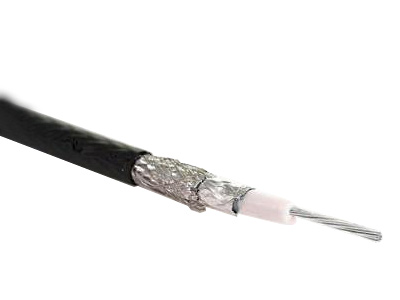
Coaxial cable is commonly built with tinned or bare copper conductors, solid or stranded, down to around 30 AWG minimum gauge, insulated with solid or foamed polyethylene (PE). As a reference point, a 28 AWG construction typically runs about 1.08mm insulation thickness with roughly 4.54mm overall diameter, while a 24 AWG construction runs closer to 1.70mm insulation and 6.20mm overall diameter. Thicker gauge generally supports better signal performance over longer runs, so match the gauge to your actual cable length and signal type — internet/modem, audio, or video — rather than defaulting to whatever gauge a supplier has most readily in stock.
coaxial cable shielding is commonly constructed as a spiral or braided tinned or bare copper wire shield, providing EMI and RFI interference protection. Braided shields generally offer better shielding coverage and durability under flexing, while spiral shields can offer good coverage at a lower cost for less demanding applications. If your product operates near other electronics, motors, or in an industrial environment with significant electrical noise, ask your supplier specifically about shield coverage percentage and construction rather than accepting a general "shielded" claim.
Standard Coaxial Cable for consumer and communications applications is commonly rated around 30V and 60°C, which covers most internet/modem, audio system, 4K video, and general consumer electronics applications. If your installation runs in a higher-heat environment — near other electronics generating heat, or in industrial equipment — confirm whether your supplier's standard construction covers that temperature range or whether a different construction is needed, rather than assuming standard coaxial cable will hold up universally.
Relevant certifications for coaxial cable commonly include UL Subject 758 and UL 1581, along with ISO 9001 for the manufacturer's quality management system. As with other cable types, ask for certification documentation tied to the specific gauge, shielding, and insulation combination you're ordering — a manufacturer's general UL certification doesn't automatically confirm every product variant in their catalog meets the same standard.
Can they produce the specific AWG gauge and insulation type your signal application requires?
Is their shielding construction — spiral or braided — adequate for your device's EMI environment, with a specific coverage percentage?
What voltage and temperature rating applies to the specific construction, confirmed against your installation conditions?
Can they provide UL 758, UL 1581, and ISO 9001 documentation tied to the exact product, not just the company generally?
Can they support bulk order customization for jacket color, length, and connector requirements?
If you know your gauge, shielding, and application requirements, send them directly for a quote.
Coaxial cable commonly ranges down to around 30 AWG minimum, with 28 AWG and 24 AWG being common reference constructions. Thicker gauge generally performs better over longer cable runs — match gauge to your specific application and cable length.
Braided shields generally offer better shielding coverage and hold up better under repeated flexing, while spiral shields can offer adequate coverage at lower cost for less demanding applications. Ask your supplier for the specific shield coverage percentage rather than a general shielded claim.
Common certifications include UL Subject 758 and UL 1581, along with ISO 9001 for quality management. Confirm documentation applies to the specific gauge and construction you're ordering, not just a general company certification.
Standard coaxial cable for consumer and communications use is commonly rated around 30V and 60°C. Confirm this covers your installation environment, especially if your application runs hotter than typical consumer electronics conditions.

Specializing in the production of wire and cable Hong Kong funded enterprises (both domestic and foreign sales); has won the IS09001-2000 international quality certification and the United States UL safety certification, is a professional wire manufacturers.
Tel: +86-769-8178 1133
Mobile: +86-13549233111
E-mail: andy@herwell.com.cn
Add: No.13 Shui Chang Er Road, Shui Kou Village, Dalang Town, Dongguan City, Guangdong Province, China


