

2026-08-22 10:49:51
Choosing a USB Cable manufacturer for an OEM bulk order comes down to four checks: confirming the conductor gauge and core configuration match your data and power delivery needs, verifying shielding is adequate for your device's EMI environment, checking that certifications are documented for the specific cable construction, and confirming the insulation and jacket material fit your product's durability and branding requirements. A supplier vague on any of these tends to be the one whose cable fails a compliance test or shows inconsistent quality across a production run.
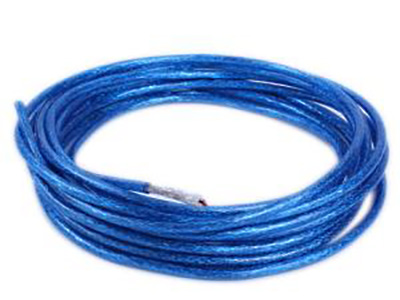
USB cables built to UL2725 commonly use AWG 24, 26, 28, or 30 conductors, in tinned or bare stranded copper, with core configurations ranging from 2 to 12 cores depending on whether the cable handles data only or data plus power delivery. A thicker gauge generally supports higher current for power delivery, while core count depends on your specific USB standard and whether additional conductors are needed for extra signal lines. Confirm your supplier can produce the exact gauge and core combination your device design specifies, rather than assuming a general USB cable capability covers your specific configuration.
USB Cables commonly use tissue tape shielding to reduce electromagnetic interference, which is generally sufficient for typical peripheral connections like mice, printers, and scanners. If your device operates in a higher-EMI environment or handles more sensitive data transmission — gaming peripherals with high polling rates or precision instrument connections, for example — ask your supplier whether their shielding construction is adequate for your specific noise environment rather than assuming standard shielding covers every use case equally well.
Relevant certifications for USB cable commonly include UL758 and UL1581, along with UL VW-1 vertical flame test compliance. As with other wire and cable products, these certifications apply to specific constructions rather than a manufacturer's entire catalog — ask for documentation tied to the exact gauge, core configuration, and insulation you're ordering. This matters most if your finished product needs its own safety certification, since an uncertified cable construction inside a certified device can create a compliance gap during audit or recall investigation.
USB cable insulation is commonly color-coded SR-PVC, with jacket options in standard PVC or customizable silicone. Standard PVC jackets are common for typical peripheral cables rated around 60°C, while applications needing more flex durability or a different temperature tolerance around 80°C may call for a silicone jacket option. If your product needs custom cable color or a specific jacket feel for branding purposes, confirm this is available at your target order volume — customization options don't always scale down to smaller bulk orders the same way they do for larger production runs.
Can they produce the specific AWG gauge and core count your device design requires?
Is their shielding construction adequate for your device's actual EMI environment, not just a general peripheral use case?
Can they provide UL758, UL1581, and VW-1 flame test documentation tied to the exact cable construction you're ordering?
Do they offer the insulation and jacket material — PVC or silicone — your temperature and durability requirements call for?
Can they support custom color, logo, or OEM/ODM branding at your specific order volume?
If you know your gauge, core configuration, and certification requirements, send them directly for a quote.
USB cables commonly use AWG 24, 26, 28, or 30 conductors, with the choice depending on whether the cable is primarily for data transmission or also needs to handle power delivery. Confirm the gauge matches your device's current and data requirements.
Common certifications include UL758 and UL1581, along with UL VW-1 vertical flame test compliance. Ask for documentation tied to the specific cable construction you're ordering rather than a general company-wide certification claim.
Standard PVC jackets, typically rated around 60°C, are common for general peripheral cables. Silicone jackets, often rated around 80°C, are chosen for applications needing more flex durability or a different temperature tolerance. Match the choice to your device's actual use conditions.
Yes, custom color, logo printing, and OEM/ODM branding are commonly available. Confirm with your supplier that these options are supported at your specific target order volume, since customization capability can vary between smaller and larger bulk orders.
Specializing in the production of wire and cable Hong Kong funded enterprises (both domestic and foreign sales); has won the IS09001-2000 international quality certification and the United States UL safety certification, is a professional wire manufacturers.
Tel: +86-769-8178 1133
Mobile: +86-13549233111
E-mail: andy@herwell.com.cn
Add: No.13 Shui Chang Er Road, Shui Kou Village, Dalang Town, Dongguan City, Guangdong Province, China


