

2026-09-04 10:54:34
PVC electrical wire is an electrical wire that uses polyvinyl chloride (PVC) as its insulation or protective covering. It is widely used for Electrical Wiring, electronic equipment, household appliances, control systems, lighting, and other low- and medium-voltage applications, depending on the wire's specific rating and applicable standards.
Also known as Pvc Wire or Pvc Insulated Wire, this type of wire combines a conductive core with a PVC insulation layer. PVC provides electrical insulation, mechanical protection, and resistance to many common environmental conditions, making it a practical material for a wide range of electrical applications.
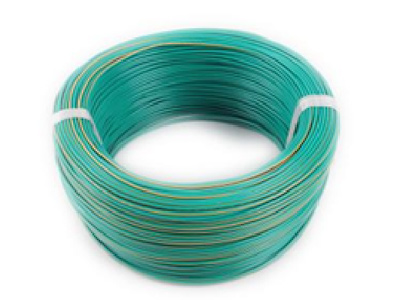
PVC electrical wire is a wire in which the conductive core is covered with PVC insulation. The conductor is commonly made from copper or another suitable conductive material, while the PVC layer helps electrically isolate the conductor from surrounding components.
A basic PVC wire structure can be described as:
Conductor → PVC Insulation → External Environment
Depending on the product design, PVC may be used as the primary insulation, an outer sheath, or another protective layer.
PVC stands for Polyvinyl Chloride. It is a widely used thermoplastic polymer that can be formulated for different levels of flexibility, mechanical strength, temperature resistance, and flame performance.
For electrical applications, PVC can be processed into an insulating layer around a conductor, creating a flexible and electrically insulated wire.
Pvc Wire is used in many electrical and electronic applications. The exact use depends on the conductor size, voltage rating, temperature rating, insulation construction, applicable standards, and installation environment.
PVC insulated wire is commonly used in residential electrical systems for suitable wiring applications. PVC insulation helps separate the conductor from other electrical components and surrounding materials.
PVC wire can be used for internal connections in appliances and electrical equipment. Its insulation properties and ease of processing make it suitable for many general-purpose wiring applications.
PVC electrical wire can be used in industrial machinery, control equipment, automation systems, and electrical panels where the selected wire specification meets the application's requirements.
Control panels often contain numerous electrical connections. PVC insulated wires can be used for signal, control, and power connections according to the relevant voltage and temperature ratings.
PVC insulated wiring is also used in various lighting equipment and electrical connections. The appropriate wire size and rating should be selected according to the electrical load and installation conditions.
Smaller PVC wires can be used for internal connections in electronic devices, power supplies, control boards, and other equipment where suitable flexibility and insulation are required.
One of the main reasons PVC is widely used for electrical wires is its insulating capability. A PVC insulation layer helps prevent unintended electrical contact between the conductor and surrounding components.
PVC can provide protection against normal abrasion and handling during installation and operation. The actual durability depends on the formulation, thickness, and construction of the wire.
PVC has resistance to many commonly encountered chemicals and substances. However, compatibility depends on the specific PVC formulation and the chemicals involved.
PVC formulations can be designed with different levels of flexibility. This allows manufacturers to produce PVC wires for applications ranging from relatively fixed installations to applications requiring more flexible connections.
PVC is widely available and can be processed efficiently, making PVC insulated wire a cost-effective option for many general electrical applications.
PVC can be applied around conductors through continuous extrusion processes, allowing efficient and consistent production of insulated wire and cable products.
Pvc Insulated Wire refers to electrical wire with an insulation layer made from polyvinyl chloride. The insulation separates the conductive core from other conductors, equipment surfaces, and users.
Depending on the application, PVC insulated wire can be manufactured with different conductor sizes, insulation thicknesses, colors, flexibility levels, and electrical ratings.
Copper is commonly used as the conductor because of its high electrical conductivity and good processing characteristics. Other conductor materials may be used depending on the application and product requirements.
The thickness of the PVC insulation can vary according to the wire's voltage rating, mechanical requirements, applicable standard, and construction.
PVC insulation can be produced in different colors. Color coding can help identify different circuits, conductors, or electrical functions during installation and maintenance.
PVC Electric Cable Wire is a broad product term used for electrical wires or cables that incorporate PVC insulation or an outer PVC sheath.
Depending on the construction, a PVC cable may contain one or multiple insulated conductors and may include an additional protective outer sheath.
A simplified cable structure can be:
Conductor → Insulation → Multiple Conductors → Outer Sheath
The actual construction varies according to the cable type and intended application.
Although the terms Pvc Wire and PVC cable are sometimes used interchangeably in commercial descriptions, they can describe different product constructions.
| Feature | PVC Wire | PVC Cable |
|---|---|---|
| Typical structure | Often a single insulated conductor | May contain one or multiple conductors |
| Construction | Generally simpler | Can include insulation, fillers, shielding, and sheath |
| Applications | Internal wiring and electrical connections | Power, control, signal, and other cable applications |
| PVC usage | Usually insulation | May be insulation, sheath, or both |
The exact terminology and classification depend on the relevant industry standards and product specifications.
A Pvc Cable Gland is a cable-entry component used to secure and protect a cable where it passes through an enclosure, panel, or other equipment opening.
However, cable glands are not necessarily made entirely from PVC. Depending on the product, they may be manufactured from different plastics or metals. Therefore, the material specification of a particular cable gland should always be confirmed with the manufacturer.
A suitable cable gland can provide several functions, depending on its design:
Secure the cable at the entry point
Provide strain relief
Protect the cable from mechanical damage
Help seal the cable entry
Maintain enclosure protection where appropriately rated
For electrical installations, the cable gland should be selected according to cable diameter, enclosure requirements, environmental conditions, and applicable standards.
Plastic Cable Conduit is a protective tube or channel designed to route and protect electrical wires and cables.
It can help organize wiring and protect cables from mechanical damage, abrasion, dust, or other environmental factors depending on the conduit type and installation environment.
Building electrical installations
Industrial machinery
Control cabinets
Electrical panels
Automation systems
Data and communication installations
Equipment wiring
Plastic conduit can be used together with Pvc Wire and other electrical cables when the selected conduit and wiring products are suitable for the installation conditions.
The conductor is prepared according to the required wire size and construction. Copper conductors may be drawn to the specified diameter and stranded when additional flexibility is required.
The conductor passes through an extrusion line where molten PVC compound is applied around the conductor to form the insulation layer.
After extrusion, the insulated wire is cooled under controlled conditions so that the PVC layer maintains the required dimensions and surface quality.
Finished wire can undergo dimensional, electrical, insulation, and appearance inspections according to the applicable product specifications and standards.
The finished PVC insulated wire can then be wound into coils, reels, or other packaging formats suitable for storage, transportation, and installation.
Check the voltage rating required for the intended electrical system. The selected pvc electrical wire should be appropriate for the application's voltage level.
Consider the minimum and maximum temperatures the wire may encounter during installation and operation.
The conductor cross-sectional area should be selected according to the expected current, installation conditions, allowable voltage drop, and applicable electrical requirements.
If the wire needs to move repeatedly or pass through a tight installation area, a suitable flexible construction should be selected.
Consider exposure to moisture, chemicals, oils, sunlight, abrasion, heat, and other environmental factors. Standard PVC wire is not automatically suitable for every environment.
Electrical wires should comply with the relevant standards and certification requirements for the target market and application.
Pvc Wire can be used outdoors only when the specific wire construction and insulation are suitable for the intended outdoor environment.
Outdoor installations may expose wiring to sunlight, moisture, temperature changes, mechanical stress, and other conditions that can affect insulation performance.
Therefore, users should check the manufacturer's specifications for UV resistance, water resistance, temperature range, and other environmental requirements before using PVC electrical wire outdoors.
PVC insulated wire has a defined operating temperature range, which varies according to the specific PVC formulation and wire construction. It should not be assumed that all PVC wire is suitable for high-temperature environments.
For applications involving elevated temperatures, the manufacturer's rated temperature and applicable standards should be checked carefully. If the operating temperature exceeds the rating of standard PVC insulation, another insulation material may be more appropriate.
PVC electrical wire is used for electrical and electronic wiring applications, including household wiring, appliances, lighting, control panels, industrial equipment, and other applications where the selected wire meets the required electrical and environmental ratings.
Pvc Insulated Wire is a wire with a conductive core covered by polyvinyl chloride insulation. The PVC layer provides electrical insulation and mechanical protection.
PVC Electric Cable Wire generally refers to electrical wire or cable products that use PVC as insulation or as an outer protective sheath. The exact construction depends on the product type.
Some PVC wires are suitable for outdoor applications, but suitability depends on the specific product's UV resistance, moisture resistance, temperature rating, mechanical construction, and applicable standards.
A Pvc Cable Gland is used to secure and protect a cable where it enters an enclosure or piece of equipment. It may also provide sealing and strain relief depending on its design and rating.
Plastic Cable Conduit is used to route, organize, and protect electrical wires and cables. It is commonly used in buildings, machinery, control cabinets, and electrical installations.
PVC wire has a specified temperature rating, but the exact rating varies by product. Standard PVC wire should not be used in temperatures beyond its manufacturer's specified operating range.
PVC wire commonly refers to a single insulated conductor, while a PVC cable may contain one or more conductors together with insulation and potentially an outer sheath. Terminology varies between industries and standards.
PVC electrical wire is a widely used wiring solution because PVC provides electrical insulation, mechanical protection, flexible processing options, and resistance to many common environmental conditions. It can be found in household electrical systems, appliances, industrial equipment, control panels, lighting systems, and electronic products.
Pvc Wire, Pvc Insulated Wire, and PVC Electric Cable Wire can be manufactured in different conductor sizes, insulation thicknesses, colors, flexibility levels, and electrical ratings. Related components such as a Pvc Cable Gland and Plastic Cable Conduit can also be used to secure, route, and protect electrical wiring.
When selecting PVC wire, always consider voltage, current, temperature, flexibility, environmental conditions, installation method, and applicable standards to ensure that the selected product is appropriate for the intended application.

Specializing in the production of wire and cable Hong Kong funded enterprises (both domestic and foreign sales); has won the IS09001-2000 international quality certification and the United States UL safety certification, is a professional wire manufacturers.
Tel: +86-769-8178 1133
Mobile: +86-13549233111
E-mail: andy@herwell.com.cn
Add: No.13 Shui Chang Er Road, Shui Kou Village, Dalang Town, Dongguan City, Guangdong Province, China


